Introduction
Databases are an essential part of modern software development. As applications grow in complexity and scale, developers must choose the right type of database to store and manage data efficiently. Two of the most common categories of databases used today are SQL databases and NoSQL databases.
Both database types are designed to store and retrieve data, but they differ significantly in structure, flexibility, scalability, and use cases. Understanding the differences between SQL and NoSQL databases helps developers select the most appropriate technology for their applications.
In this blog, we will explore how SQL and NoSQL databases work, their advantages and disadvantages, and when developers should use each type.
Table of Contents
What is SQL?
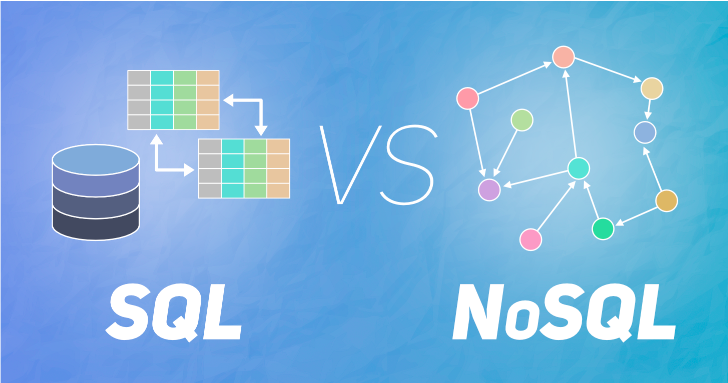
SQL stands for Structured Query Language. It is a standard language used to interact with relational databases. SQL databases organize data into tables consisting of rows and columns. Each table represents a specific entity, such as users, products, or orders, and relationships between tables are defined using keys.
SQL databases follow a strict schema, meaning the structure of the data must be defined before inserting any records. This schema defines the columns, data types, and relationships within the database.
One of the most widely used SQL databases is MySQL, which powers many web applications and content management systems.
Another popular relational database is PostgreSQL, known for its advanced features, strong data integrity, and reliability in enterprise systems.
SQL databases are particularly suitable for applications where structured data and strong relationships between tables are important.
What is NoSQL?
NoSQL stands for “Not Only SQL.” Unlike relational databases, NoSQL databases are designed to handle large volumes of unstructured or semi-structured data. They provide flexible data models that allow developers to store information without a fixed schema.
NoSQL databases can store data in various formats such as documents, key-value pairs, graphs, or wide columns. This flexibility allows developers to adapt the database structure as application requirements evolve.
One of the most popular NoSQL databases is MongoDB, which stores data in JSON-like documents. This structure makes it easier to work with dynamic data and complex objects.
Another widely used NoSQL database is Apache Cassandra, designed to handle large-scale distributed systems with high availability and fault tolerance.
NoSQL databases are often used in applications that require rapid scalability and flexible data storage.
Key Differences Between SQL and NoSQL
One of the primary differences between SQL and NoSQL databases is how they structure data. SQL databases use tables with predefined schemas, while NoSQL databases allow flexible structures that can change over time.
SQL databases follow a relational model where tables are connected using relationships such as primary keys and foreign keys. NoSQL databases typically store data in independent records or documents without strict relationships.
Another important difference is scalability. SQL databases usually scale vertically by upgrading hardware resources such as CPU or memory. NoSQL databases are designed to scale horizontally by distributing data across multiple servers.
Consistency is another factor. SQL databases follow strict ACID properties to ensure reliable transactions and data integrity. NoSQL databases often prioritize performance and scalability, sometimes sacrificing strict consistency for faster operations.
Advantages of SQL Databases
SQL databases provide strong data consistency and reliability. This makes them ideal for applications where accurate transactions are critical, such as banking systems or financial platforms.
Another advantage is the standardized query language. SQL is widely understood and supported across many platforms, making it easier for developers to work with relational data.
SQL databases also enforce strict schemas, which helps maintain data integrity and prevent invalid data from entering the system.
Because relational databases have been used for decades, they offer mature tools, documentation, and strong community support.
Advantages of NoSQL Databases
NoSQL databases are highly flexible and allow developers to store data without rigid schema definitions. This makes them ideal for applications where data structures change frequently.
Another major advantage is scalability. NoSQL databases can distribute data across multiple servers, making them suitable for applications with massive user traffic.
NoSQL systems also handle large volumes of data efficiently, especially in big data and real-time analytics applications.
They are commonly used in modern web applications, social media platforms, and cloud-based services where flexibility and scalability are more important than strict relational structures.
Use Cases for SQL Databases
SQL databases are commonly used in applications that require structured data and reliable transactions.
Banking systems rely on relational databases to maintain accurate financial records. E-commerce platforms use SQL databases to manage products, orders, and customer data.
Enterprise resource planning systems also depend on relational databases to maintain relationships between various business processes.
Whenever applications require complex queries, strong relationships between data, and consistent transactions, SQL databases are usually the preferred choice.
Use Cases for NoSQL Databases
NoSQL databases are commonly used in applications that handle large volumes of dynamic data.
Social media platforms store posts, comments, likes, and user activities using NoSQL systems because their data structures frequently change.
Real-time analytics systems often use NoSQL databases to process large datasets quickly.
Content management systems and mobile applications also benefit from NoSQL databases because they allow flexible and scalable data storage.
Cloud-based platforms frequently rely on NoSQL technologies to handle global user traffic and large-scale distributed systems.
Choosing the Right Database
Choosing between SQL and NoSQL depends largely on the requirements of the application.
If your application requires strong relationships between data, strict consistency, and complex queries, a relational SQL database is usually the best choice.
If your application requires flexible data structures, rapid scalability, and the ability to handle large volumes of unstructured data, a NoSQL database may be more suitable.
Many modern applications even use a hybrid approach, combining SQL and NoSQL databases to take advantage of the strengths of both systems.
Conclusion
SQL and NoSQL databases are both powerful technologies that serve different purposes in modern software development. SQL databases provide strong structure, reliability, and data integrity, making them ideal for transactional systems. NoSQL databases offer flexibility and scalability, making them suitable for large-scale and rapidly evolving applications.
Understanding the differences between these database types allows developers to design better systems and choose technologies that align with their project requirements. As data continues to grow in importance across industries, both SQL and NoSQL databases will remain fundamental tools for building modern applications.







1 thought on “SQL vs NoSQL Databases – Differences, and Advantages – 2026”